
5 Signs Your Business Door Hardware Needs a Locksmith
A panic bar that sticks, a keypad nobody remembers the master code for, a door that never quite latches. Small problems with commercial hardware tend to show up at closing time. Here’s what to watch for.
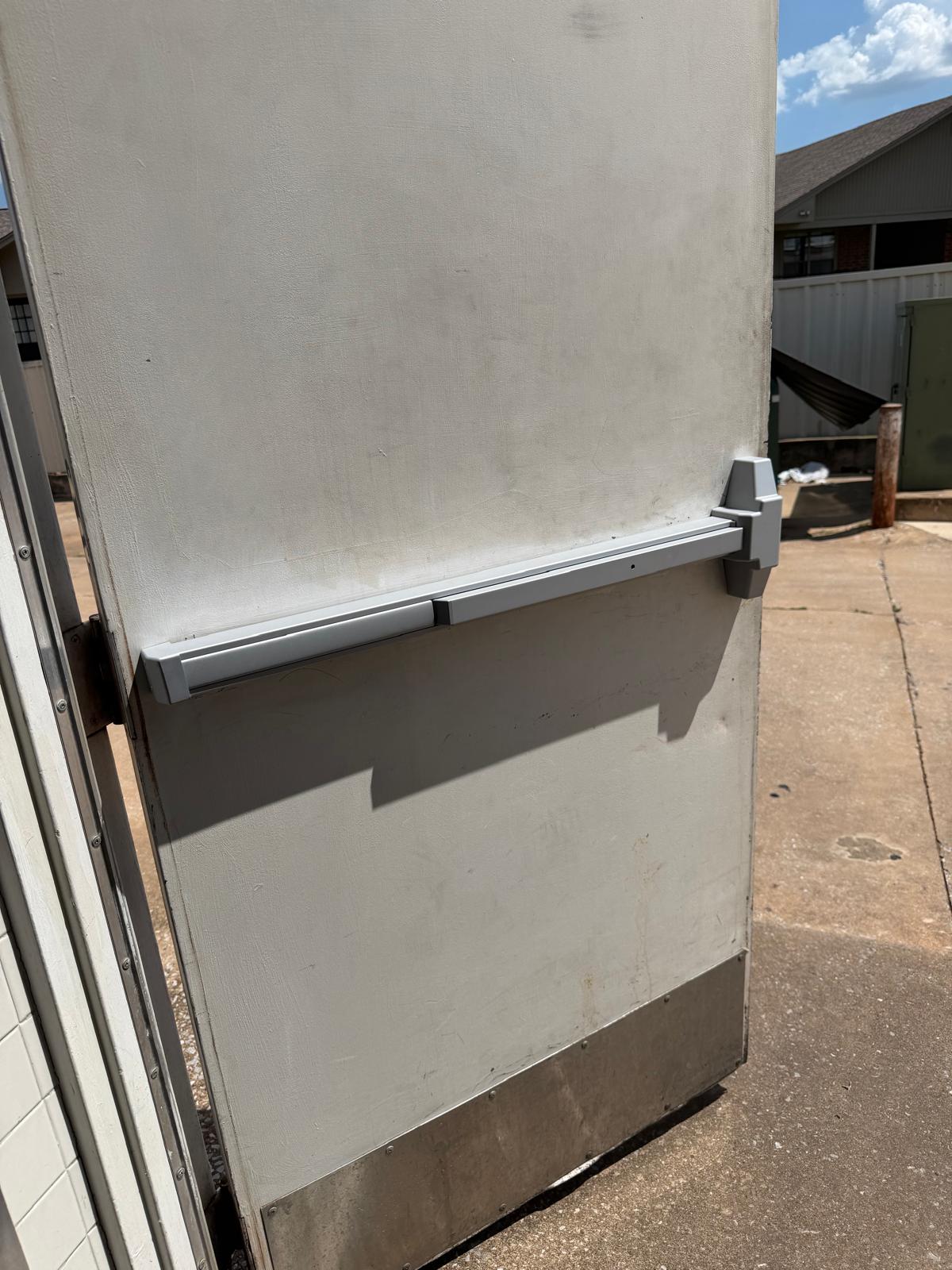
Commercial doors take a beating. A busy shop or office door can open and close hundreds of times a day, in Oklahoma heat, wind and the occasional ice storm. The hardware usually gives plenty of warning before it fails. The trick is noticing it before the night the door won’t lock and someone has to stay late waiting for help.
Here are the five problems we see most often in Edmond and Oklahoma City businesses, and what usually fixes them.
1. The door doesn’t latch on its own
If staff have to pull the door shut behind them, or the latch bounces off the strike, something is off. Most of the time it’s the door closer: it’s out of adjustment, leaking oil, or set too slow on the latch speed. Sometimes the hinges have sagged and the latch no longer lines up with the strike.
This matters more than it seems. A door that doesn’t latch isn’t locked, even if the lock itself is working perfectly. A closer adjustment or a strike alignment is often a quick fix.
2. The panic bar sticks or needs a shove
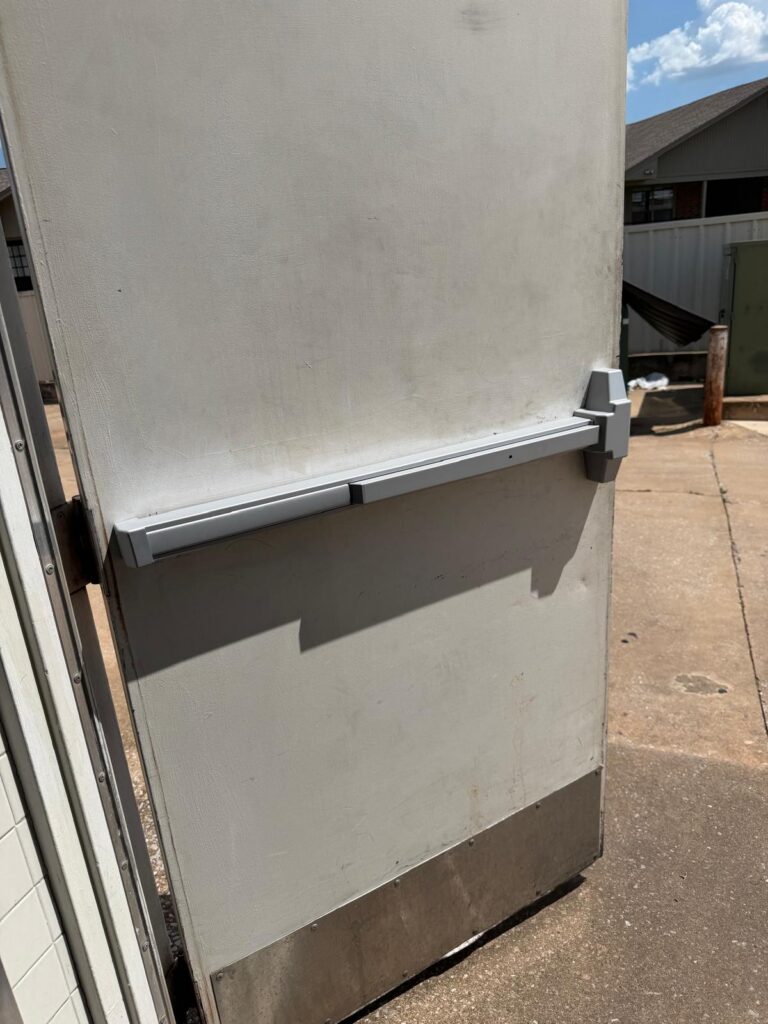
Exit devices, the push bars on emergency and back doors, are life-safety hardware. They need to release smoothly every time, with one push, by anyone. If yours sticks, rattles, or the bar stays pressed in, have it looked at soon. Dirt, a loose mounting screw or a worn latch is usually to blame, and they’re usually repairable without replacing the whole device.
3. Nobody knows who has keys anymore
Former employees, cleaning crews, a contractor from the last remodel, a manager who left two years ago. If you can’t say with confidence how many keys to your building exist, you have a security problem, not a lock problem.
The fix is usually a rekey of the affected locks, and for growing businesses, a master key system: each person carries one key that opens exactly the doors they need. When someone leaves, you rekey one level instead of the whole building. Restricted keyways go one step further, because the keys can’t be copied at a hardware store.
4. The keypad is worn, or the code is an open secret
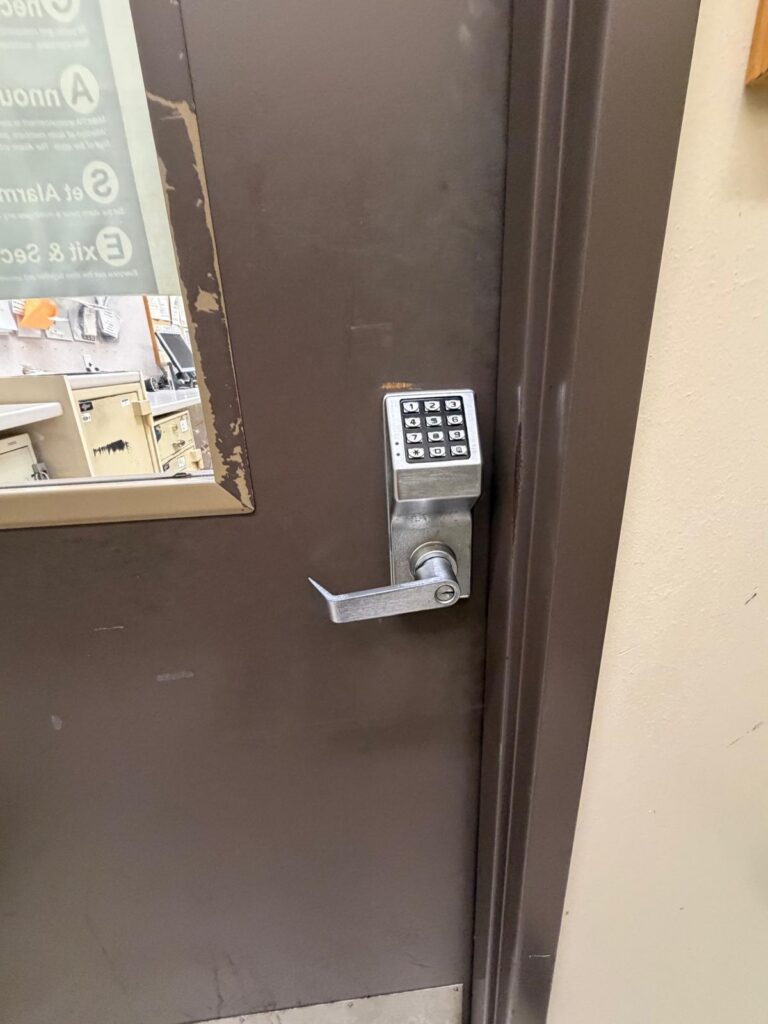
Keypad locks are great for staff areas and back doors, as long as the code actually changes. Look at the buttons. If four of them are shiny and worn and the rest look new, anyone paying attention can narrow your code down fast.
Change the code when people leave, retire the default master code, and make sure the key override still works with the key you have. If the keypad is failing or the batteries die every few weeks, the lock may be fighting a misaligned door, which is worth fixing before it locks somebody out.
5. Keys are getting hard to turn
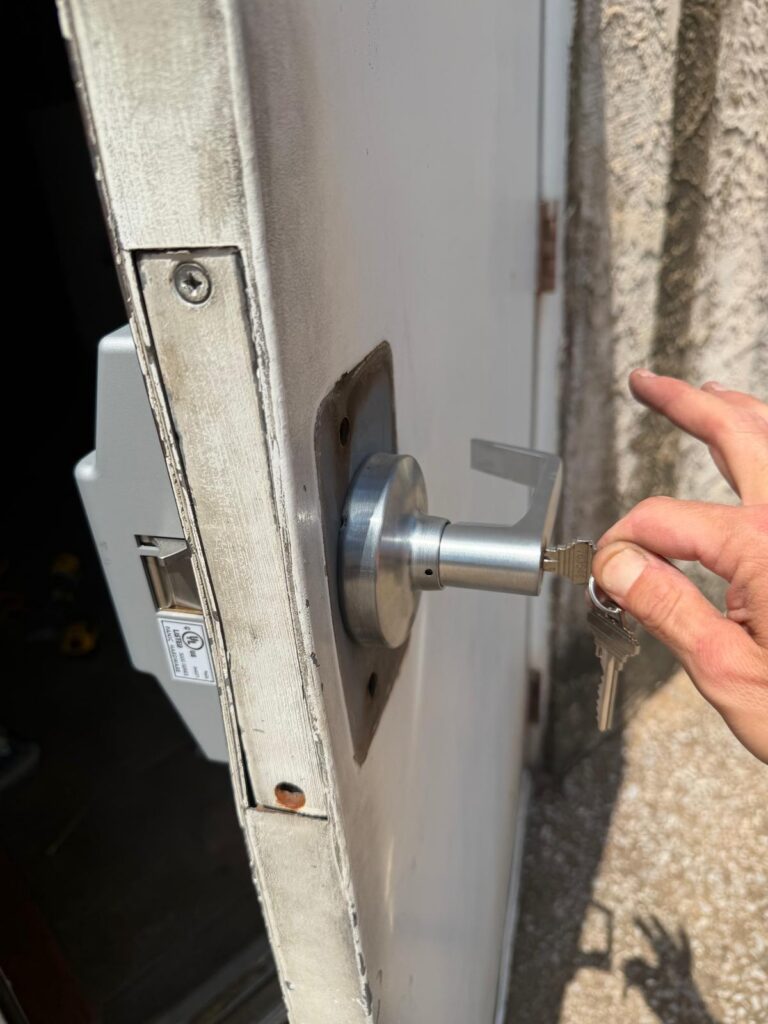
A key that sticks, needs jiggling, or only works if you pull the door toward you is telling you the cylinder is worn or the door has shifted. Don’t spray it full of WD-40, which attracts dirt and gums up the pins. A locksmith can clean and lubricate the cylinder properly, cut fresh keys from the code, or replace a worn cylinder before a key snaps off inside it.
The cheapest repair is the early one
Almost every emergency call from a business starts as one of these small annoyances. Fixing a closer or a sticky exit device on a Tuesday afternoon costs far less, and causes far less disruption, than a door that won’t lock at 9 PM.
If any of this sounds familiar, take a look at our commercial locksmith services or call us at 405-276-3904. We’re open Sunday through Friday, 8 AM to 6 PM, and we’ll schedule planned work around your business hours.
Keep reading
Rekey or Replace? How to Decide After Moving Into a New Home
Everyone says to change the locks when you move in. Most people don’t actually need new locks. Here’s how to tell whether a rekey will do the job, and when replacement is worth the money.
Read the article
Locked Out of Your House in Edmond? What to Do in the First 10 Minutes
The door clicked shut and your keys are on the other side. Here’s a calm, practical checklist for the first ten minutes, from someone who opens locked doors for a living.
Read the article